
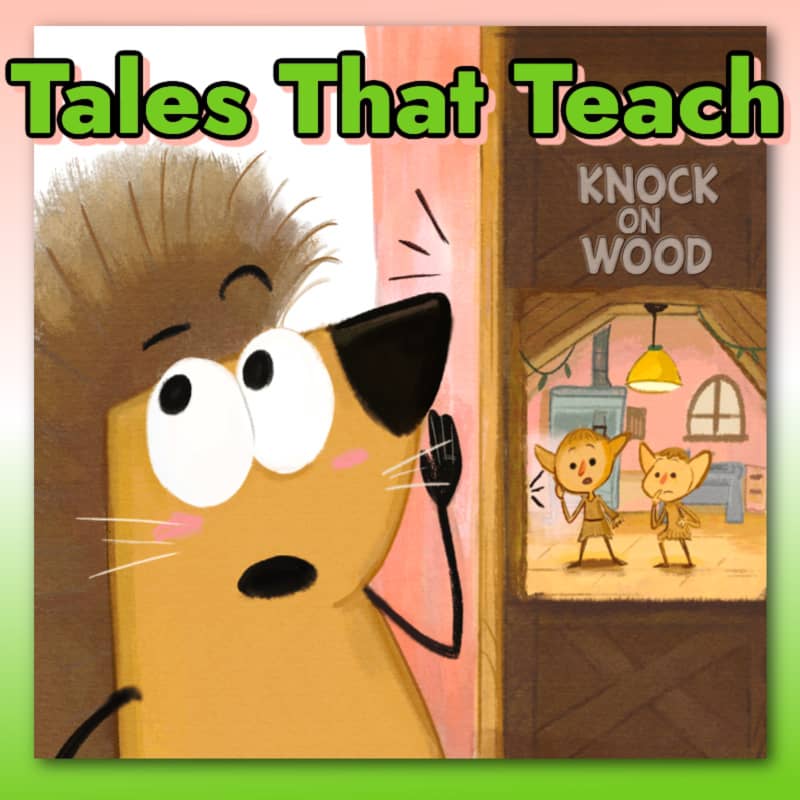
In Dorktales Storytime’s “Knock on Wood” Jonathan’s bad day takes an unexpected turn when he and his sidekick, Reginald T. Hedgehog, shrink down to investigate whether wood nymphs are behind his string of bad luck. Through Jonathan’s challenges, children learn about resilience, problem-solving, critical thinking and the importance of separating fact from fiction.
Listen on our website or click on an icon below to go to your favorite podcast app:


FREE PDF TO GET THE CONVERSATIONS STARTED!
Grab your free list of comprehensive questions for Knock on Wood designed to spark thoughtful conversations, promote deep thinking and help young listeners relate the episode’s themes to their own experiences and perspectives.
There are three key takeaways from the episode that can be used to spark meaningful conversations and deeper learning:
Resilience: Turning Bad Days Around
Children can learn that even when everything seems to be going wrong, they have the power to turn things around with a positive attitude and creative thinking. In the episode, Jonathan’s initial frustration over his series of mishaps (gum in hair, soaked clothes, lost shoe) mirrors the types of setbacks children often experience. But rather than giving up, Jonathan and Redge go on an adventure to figure out what’s causing the bad luck. This teaches young listeners that facing challenges head-on, even with humor, can help turn tough situations into opportunities for growth.
Example from the episode: Jonathan’s refusal to dwell on his bad luck and his willingness to seek out the wood nymphs for answers show resilience in action.
Curiosity and Problem Solving: Investigating the Case
Curiosity is at the heart of learning, and this episode demonstrates how asking questions and investigating the unknown can lead to creative solutions. Jonathan doesn’t simply accept that his day is terrible—he wants to understand why. By engaging in problem-solving, Jonathan and Redge model how children can approach their own difficulties by digging deeper and exploring different perspectives.
Example from the episode: Jonathan’s decision to shrink down and investigate the world of the wood nymphs is a playful example of using curiosity to solve problems in an unexpected way.
Superstitions and Critical Thinking: Separating Fact from Fiction
The episode opens a great opportunity to discuss superstitions, where they come from, and how to think critically about beliefs. Jonathan wonders if his bad luck is because he forgot to “knock on wood,” a phrase many kids may have heard. You can use this to encourage kids to think about why people believe in superstitions and how they can question these beliefs with logic and evidence.
Example from the episode: As Jonathan questions whether not knocking on wood caused his bad luck, you can guide children in understanding that while some rituals can be fun, they should use critical thinking to assess situations and solve problems.
Social Emotional Learning
Here’s a breakdown of the social-emotional lessons introduced in “Knock on Wood” based on the CASEL-SEL Framework:
Self-Awareness
Understanding emotions and recognizing strengths
In the episode, Jonathan experiences a range of emotions as his day starts going badly, from frustration to curiosity. Through the story, children can see how Jonathan becomes aware of his emotions, helping them recognize their own feelings when faced with a tough situation.
Example: Jonathan’s initial irritation when gum gets stuck in his hair reflects how most people often feel when things go wrong. As the episode progresses, Jonathan starts to identify his emotions and understands how they influence his actions.
Self-Management
Managing emotions and behaviors to achieve goals
The episode teaches self-management by showing how Jonathan shifts his mindset from focusing on his problems to investigating the cause. Instead of letting his frustration spiral out of control, he takes positive action.
Example: Jonathan’s decision to go on an adventure with Redge to figure out whether wood nymphs are behind his bad luck demonstrates self-management. He doesn’t give up when things go wrong, but instead chooses to manage his emotions by turning the situation into a mystery to solve.
Social Awareness
Empathy and understanding of others’ perspectives
Social awareness is highlighted through Jonathan’s and Redge’s interactions with the tiny wood nymph world. Jonathan becomes open to new perspectives and possibilities, even when they seem far-fetched.
Example: When Jonathan shrinks down to explore the world of the wood nymphs, he shows curiosity and respect for this different perspective. This teaches kids how to be open to learning from others and to be empathetic toward different viewpoints.
Relationship Skills
Building positive relationships through communication and teamwork
The teamwork between Jonathan and Redge shows how effective communication and collaboration can help resolve problems. The episode emphasizes how working together can lead to success and stronger friendships.
Example: Jonathan and Redge constantly communicate and support each other throughout the adventure, even when things seem a bit strange. Their teamwork helps them explore the mystery together and strengthens their bond.
Responsible Decision-Making
Making ethical and constructive choices
The episode encourages responsible decision-making as Jonathan evaluates what might be causing his bad day. Instead of blaming his bad luck on something superstitious, he decides to take action and explore the possibilities logically, teaching kids how to think critically.
Example: Jonathan’s decision to investigate whether his luck is tied to not “knocking on wood” reflects a responsible approach to problem-solving. He takes initiative instead of remaining stuck in frustration, showing how thoughtful decision-making leads to constructive solutions.
Leave a Reply