

Dorktales Podcast: Episode 19
Hidden Heroes of History
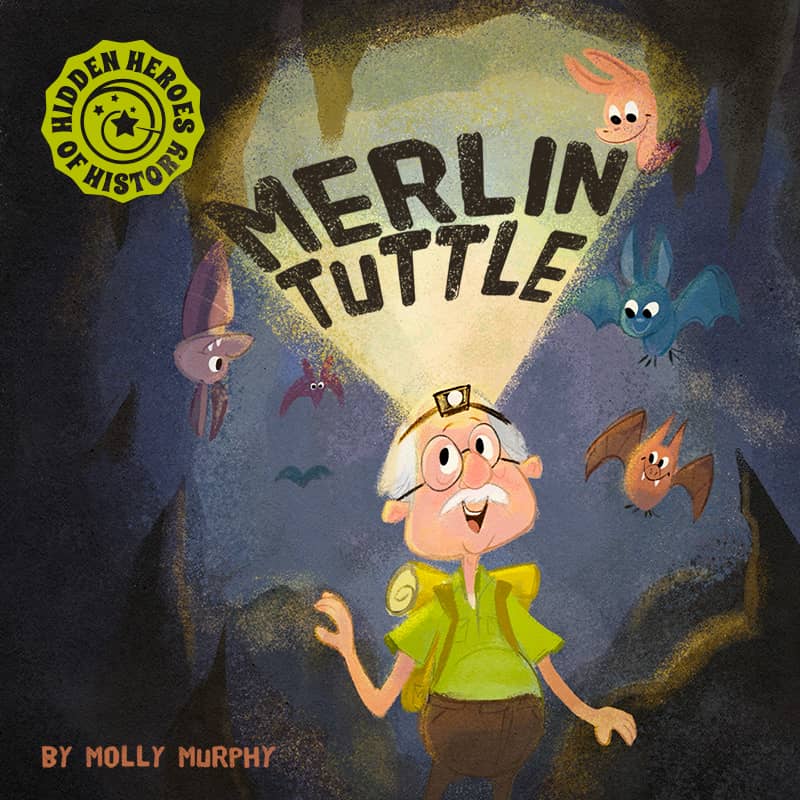
Merlin Tuttle
A story of bat caves, field notes and righting a wrong reputation! Merlin Tuttle has spent his career studying bats and proving why they are an incredibly vital part of the ecosystem. His research, books, lectures and National Geographic style photography have led to the knowledge that bats are not spooky but spectacular! Meet the hero who showed the world that the some of the smallest creatures are making the biggest contributions—the real “batman” and champion protector of nature’s delightful, dark-winged, do-gooders.

FREE ACTIVITY GUIDE FOR THIS EPISODE!
We’ve created tools for parents and educators to keep kids’ imaginations engaged after listening to our podcast. Grab our FREE activity guides, social-emotional guides, use-your-imagination activities, themed playlists and more.
Podcast Episode Credits
Narration, Voice Over and Podcast Host: Jonathan Cormur
Scriptwriter and Show Producer: Molly Murphy
Sound Production, Audio Editing and Mastering: Jermaine Hamilton
Podcast Episode Illustration: Arthur Lin
Title Design and Layout: Jeri DeMartini
Did You Know?
Merlin Tuttle is an accomplished ecologist, conservationist, chiropterologist (K-eye-rop-ter-ologist), writer, wildlife photographer.
Ecology is the study of living things and their environment. So, ecologists examine how living things depend on one another for survival, and how they use natural resources like air, soil, and water to stay alive.
A conservationist is a person who does work to protect and preserve our environment and wildlife.
A chiropterologist is someone who studies bats. The word literally means “hand wing” because for bats, their wings are actually their hands.
At the age of 17, Merlin Tuttle learned about a bat cave near his home in Tennessee. He convinced his father to take him to the cave and venture in alongside him. He started exploring a specific portion of the cave when he was suddenly surrounded by a swarm of gray bats!
Mr. Tuttle found that the bats were very gentle creatures, andhe realized he was standing in their exit, so they were just swarming to try and leave the cave.
He grew curious about the bats and their behaviors, returning to the cave often with his parents, and observing them. One of the first things he noticed was that the bats would be gone for long stretches of time. Even though he had read in books that the gray bats didn’t migrate, he concluded that they MUST be, since he saw evidence of them disappearing during certain times of the year.
Migration is when a creature moves from one place to another based on the seasons.
After documenting his findings in his own field notes, Mr. Tuttle’s mother drove him to meet scientists from the Smithsonian’s Division of Mammals in Washington, D.C. where they shared tools to help him observe the bats more closely. This was the beginning of his long career in bat research.
Mr. Tuttle started his study of gray bats when many thought this species, or type, of bat were on the path to becoming extinct.
Extinction means the total disappearance of a species on this earth.
Mr. Tuttle led the charge to protect them, learning about their needs, educating the public about their importance, why they should be valued, and even getting them listed as an endangered species by the government, which gave them additional protections. Because of Mr. Tuttle’s work, the population of gray bats has grown by the millions!
Mr. Tuttle went on to create organizations like Merlin Tuttle’s Bat Conservation and Bat Conservation International during a time when most people misunderstood the value of bats. He’s traveled the world, sharing his stories. He paved the way for hundreds of research projects. He’s written books on bats. He mentors students and aids various conservation efforts across the globe.
One of our favorite examples is of Mr. Tuttle saving the bats of the Congress Avenue Bridge in Austin, Texas. Over one million bats, known as free-tailed bats, began living beneath the bridge, and many health officials and reporters were telling scary, negative stories about the harmless critters.
Mr. Tuttle went out and rallied the community, the news, and even those same health officials to share why the bats were a safe, and an extremely positive, presence for all Austin residents.
The bridge went from being spooky to spectacular, and is now one of the most popular tourist attractions in the state. His work at the bridge also jump-started his organization and many other like-minded organizations around the world.
It’s also important to mention Mr. Tuttle’s bat photography. Chances are, if you see a really excellent bat photo, it’s the work of Mr. Tuttle. They’re often used to teach, and have been seen in famous publications like National Geographic.
Merlin Tuttle is still doing his important work advocating for bats, our world’s most amazing nocturnal pollinators.
Why are bats so important and why does Mr. Tuttle discovering his lifelong passion really matter?
Here are just a few reasons:
- Bats are pollinators which means that, like bees, they go from flower to flower in order to help them reproduce. And bats spread the seeds of different fruit so that more plants can grow and thrive.
- Over 300 species of fruit depend on bats to survive, like various peaches, mangoes, bananas, and guavas.
- Some bats eat insects, helping to keep populations in check and assisting our world’s farmers. They help them grow more food without having to use harmful chemicals, since they come to eat the bugs that would normally damage the crops.
- Bats are an incredibly vital part of our ecosystems. And Mr. Tuttle has worked his whole life to share that knowledge with people around the world, making sure that bats survive and thrive.
- Animals like bats can get a bad reputation that they simply don’t deserve. It takes incredible people like Merlin Tuttle to show just why they matter. He’s a hero who truly believes in how much each living thing matters in the world. He’s someone who knows that something as small as, say, a little free-tailed bat, has so much to offer and has a very big impact on each of us.
Explore the Bat World
- Look at some of Merlin Tuttle’s awe-inspiring bat photography
- Check out Merlin Tuttle’s bat fun facts
- Watch 12 minute YouTube video “The Importance of Bats” hosted by Merlin Tuttle
- Make your backyard “Bat Friendly” with The Bat House Guide and free resources from Merlin Tuttle’s Bat Conservation.
- Bats, Bees and and Other Backyard Beasts World Vancouver A Science World Family Event on YouTube
- Girls and STEAM 2022: Bugs, Bees and Bats/Science World Vancouver
- Explore games and activities from Bat Conservation International
Are you interested in learning more about bats? Listen to these episodes by other Kids Listen podcast creators:
- Wow in the World: “Ah, BATS!” episode on the who, what, when, where, why, how and wow in the world of Vampire Bats.
- Tumble Science Podcast for Kids: “The Journey to the Bat Cave” episode is a field trip to the biggest bat colony in the world!
- Curious Kid Podcast: “Curious about Bats” episode where you’ll find answers to questions kids have about bats.
- Earth Rangers: “Big-Eared Bats and Big Cat Countdown” episode where Earth Ranger Emma ventures into a bat cave to learn about these unique flying animals.
- Cool Facts about Animals: Episode on why “Vampire Bats” are more cool than creepy.
- Smash Boom Best: “Bats vs. Owls” episode on which is cooler, bats or owls? You get to decide.
- But Why: A Podcast for Curious Kids: “Bats and Beavers” episode recorded live at the Vermont Bat Center.
- Nature Nerds: Learn all about our favorite nocturnal animal in this “Bats” episode